China’s call for a “De-Americanized” Future?

317b5967cf5b1b4ca8849bfa3f7f89e52a4d4aeeWhile this would, no doubt, be disastrous for the American economy, which is vastly based on the “full faith and credit of the United States government” of the United States dollar — could China’s own less-than-impartial statement that the future of the world should be “de-Americanized” have a point?

Partisan infighting in Congress, on top of massive trade deficits with China and Japan (among others) are threatening the faith the world has in the US government’s ability to pay the debts it has already racked up — even in simple interest payments on Treasury Bills and other things.

While there’s yet been a default on any obligation of the United States, if partisan gridlock doesn’t change in Washington, could it be an inevitable future?

Those on the right say our borrowing to fund the government and to pay our obligations say this is an unsustainable model do have a point.  Borrowing forever with no intention to fix it will only result in a catastrophic failure — sooner or later.

However, liberal economics specifically state that when the economy is in a recession, or otherwise growing at an anemic rate, that it is the government’s duty to pump money into the economy to ensure that consumer confidence remains high and that people spend — particularly during problems like high unemployment or lower consumer confidence, the two silver bullets to economic futures.  When people are scared (fiscally speaking) they withhold money; and not spending money grinds the economy to a halt.  Very effectively.

Are both goals mutually exclusive?  I don’t think so.

While a plan to begin to work down our debt obviously needs to be in place, because consumer confidence still hasn’t fully recovered from The Great Recession, this is where [neo?]liberal economics comes in.  Adaptive economics, in particular.  The economy “running itself,” particularly without any regulation, obviously doesn’t work as much as an authoritarian, centrally planned economy.  A government buffer helps “prop up” the economy, while the wheels of the private sector continue to spin.

It’s a mess, but it’s one we can fix — if we come together and work the problem… and not just point fingers — and America can still be a leader in the world.

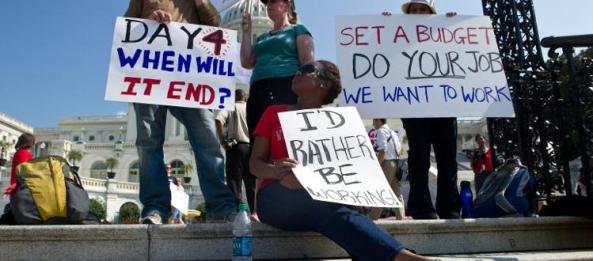
#2013Shutdown’s effect on Business and the Future of America…

Professor David Victor, Ph.D.

Professor David Victor, Ph.D.

One of my former (and future, no doubt!) professors from Eastern Michigan University, Dr. David Victor, posted this morning about a possible future oil boom for Iceland, noting that a recent survey and discovery shows Iceland sits on a *LOT* of the possible undiscovered oil reserves in the world, estimates place it at 13%.  With the thawing of the northern ice cap, and the North Atlantic Current keeping ice from marring up the major ports of the island nation, all of these things could conspire to bring a well-needed boon to it’s economy.

However, another follower on Facebook of Dr. Victor, the Chair of CitrinGroup, also threw in his two cents, stating that while the Chinese are courting and betting on future oil producers, such as Iceland, the United States, already suffering an anemic economy, is wasting it’s time on policy matters that in the grand scheme of things, don’t really matter.  I tend to agree.

The United States’ economy is JUST starting to  gain traction, while sitting fairly stationery and spinning it’s wheels, begging to move forward since the crisis began in the Subprime Mortgage market in 2007.  We’re finally starting to see forward momentum beyond the familiar numbers of “0.04% gains.”  People are beginning to feel confident in the economic system again.

However, when people see the Government itself can’t get it together and pay it’s OWN bills, that’s when people begin to hold onto their OWN money, going “What if I find myself right back in 2008 again?”  I admit, I found myself thinking twice when I made a relatively small purchase this morning, because the well-being of MY household budget is determined by the fiscal health of the Federal Government.

When recessions and slumps hit the nation, the Government is there to provide relief, to buffer the blow with benefits, stimulus and other some-such capital, by pumping money into the system.  However, if that money is cut off too soon, the economy can slump again.  Bad news breeds bad feelings.  Bad feelings breed either a binge on spending, or a lack of spending, more often, the latter.  When people stop spending, the economy grinds to a screeching halt — as we saw starting with the credit freezes of 2008.  While one can argue the merits of policy on both sides of the aisle, the latest budgetary and policy debate is doing nothing but killing consumer confidence, and indeed, making foreign markets question the stability of the American economy.

While Obamacare is certainly an expensive program, so was the F-35 Fighter — which estimates have the cancelled fighter costing as much as a trillion dollars — a number often attributed to the cost of Obamacare.  Oddly enough, I haven’t heard it mentioned once by Republicans on the Hill, even though it is now essentially a great waste of capital and expenditures.

Who’s right?  Who knows.  One thing I do know is — #2013Shutdown can be a death knell for the fragile traction the American economy took years to get.

A Government Shutdown… what it means, and why you should care…

download“Due to the failure of Congress to enact appropriations for fiscal year 2014, Office of Management and Budget Director Sylvia Mathews Burwell tonight directed agencies to execute their plans for an orderly shutdown of the Federal government.”

Continue reading

My Knee-Jerk Review: The Pebble Watch

ImageI got my Pebble watch today!   Right out of the box, I felt the quality and the care of craftsmanship put into this item.  It’s obvious that the designers of the watch cared as much foe aesthetics and ergonomics as they did about functionality.  It’s an absolutely beautiful, functional device that compliments any professional.  The black version, which I got, goes with any wardrobe and is as much stylish as it is sedate.

While I won’t go into too many details without a video of my own, I wanted to show you what I did with mine, and how I like it.  The video reviews I post here are VERY realistic and pretty much spot-on.

Video Reviews:

– Engadget: http://www.youtube.com/watch?v=VGzdqqkQ0IA
– TechSmartt: http://www.youtube.com/watch?v=Z42vxp1ywMU
– SoldierKnowsBest: http://www.youtube.com/watch?v=uOVX00e9_oc
– Selim Akca: http://www.youtube.com/watch?v=wdgIz8X8Qsk

Of course, I had to have my Star Trek watch-face.  😀

20130923_164408

China signals Lunar Landing within Decade…

…we were done with the moon, ANYWAY — STUPID MOON!
  — Jon Stewart

In a spot from The Daily Show four years ago, Jon Stewart pokes fun at the fact that India found water on the Moon, that the United States missed in the last forty years of exploration.  “Billions of gallons of it.”

Jon Stewart: “…I didn’t know NASA had a base in India!”
Aasif Mandvi: “THEY DON’T!  This is the Indian Space Research Organization!”

Parody aside, the latest space news is that the People’s Republic of China, the rising super-power directly challenging the United States’ unchallenged military presence on, above or AROUND the world, is now setting it’s sights on a lunar landing.

Launching its own [uninhabited] test space station, designated Tiangong 1 (Heavenly Palace 1) in 2011, the Tiangong Space Program is China’s attempt to place a large, modular space station in orbit by the beginning of the next decade.  From here, Chinese cosmonauts can conduct their own research and development, as well as support it’s own lunar program, free from the stranglehold the United States and it’s allies has had on Space for the last half-century.

China may be coming to space-faring late, compared to the United States, Russia and India, however, let’s look at the current setups: The United States has a minimal space program, with NO current flight ability of it’s own.  Astronauts/Cosmonauts from the United States require the use of launch vehicles and equipment from the Russian Federation (and to a limited point, at this time, private companies such as SpaceX) to reach, resupply or restaff its interests aboard the International Space Station.   Indeed, another sign of the times is the massive cut NASA took from the President’s pen, through Congress, in appropriations.  The Space Shuttle was retired.  The successor to the Space Shuttle, the Apollo-inspired Project Constellation, was cancelled, leaving the United States military and government’s ability to reach out to the stars in limbo for the foreseeable future.

Indeed, this was echoed by NASA Administrator Charles Bolden.  “NASA is not going to the Moon with a human as a primary project probably in my lifetime,” he stated.

However, he continued: “…and the reason is, we can only do so many things,”

While he didn’t specifically elaborate, it’s possible that NASA’s future plans could lie elsewhere — specifically, landings on asteroids, or even Mars, in relatively short order.

While the cancellation of the Constellation Project puts a American landing on Mars anytime soon in question, as Orion was designed with the intention of being capable of travelling to both the Moon AND to Mars, will American innovation and the memories of the Space Race of the 1960s embolden American spirit in an even broader space race?

The Banking System isn’t getting better — it’s getting worse.

Having worked in finance for over half a decade, and now having been involved in high finance now nearly a decade, I’ve been exposed to now only the internal workings of how credit and finance works from the inside, but I’ve studied it extensively as a matter of interest, and I see a problem developing — some if it we all know about, the other parts, not so much.

While our individual finances are improving overall, I see a big problem developing with the same system that brought it down in 2007 — unregulated banking.

In the United States, from the 1700s to the early 1900s, there was banking crash roughly every 15 years.  With the institution of strong regulation, particularly after the Stock Market Crash of 1929, the United States entered a golden age of banking.

How can this be?  With over 100 years of 15 year booms and busts, why did it all of a sudden stabilize?  Regulation.  With strong, effective regulation, bank busts came to a halt.  Not a SINGLE widespread bank bust occurred for over FIFTY years in America.

While a majority of this process took place in the 80s and 90s, the arguable beginning was the Nixon Shock; a term attributed to the end of the Bretton Woods system in the United States, when Nixon unilaterally wrote off the US Dollar’s ability to be converted into Gold; the United States Dollar became a free-floating value currency, which caused the US Dollar to become a reserve currency in many nations of the world — massively increasing it’s value.  In the 1980s, this trend continued: deregulation became the buzz word.  With more risks, banks could make more money with the same hard cash in it’s accounts.

restore-glass-steagallThe most hardcore change, in my opinion came during the Clinton administration, when Congress approved the repeal of the Glass-Steagall Act of 1933, repealed by the Gramm-Leach-Bliley Act of 1999, signed by Bill Clinton in November of that year.  This VERY important piece of legislation turned banking regulation on it’s head: Glass-Steagall was an instrument that separated Main Street banks from Wall Street banks.  In english, this means regular depositor banks (such as Bank of America, or Huntington Bank or Chase Bank) could play the stock market and make investments with depositor money that it otherwise barred from doing under the 1930s legislation, just like Investment banks and corporations can and do.

Seen as a vestige of post-Crash and pre-/post-World War II stabilizing legislation, it was, at the time, seen as unnecessary.  However, when deregulation began picking up steam in the 1980s, things happened in short order:

– The 1980s and 1990s Savings & Loan Crises: Savings and Loan thrifts were given many of the same powers as banks under deregulation legislation signed by President Carter in 1980; without the same regulations banks were subject to.  With the massive take-off of real estate lending, (outstanding mortgage debt was $700 Billion-ish in 1970, and nearly doubled to $1.2 Trillion in 1980), S&L’s took massive risks by lending out more money than they should have, on top of rising interest rates caused many institutions to fail.  This was failure to such a degree the United States had never seen.

– Repeal of Glass-Steagall Act: With the S&L failures still fresh on the minds of financiers and politicians, many argued further deregulation was required to avert such a disaster in the future.  Congress passed Gramm-Leach-Bliley and it was signed by President Clinton at the twilight of his Administration.  By the end of the next Administration (G. W. Bush), only EIGHT years later. the United States was reeling from the worst banking and credit crisis it had seen since the dawn of the 20th century, and it was spreading throughout the world.  The FDIC began publishing lists of bank failures every Friday, conducting raids on banks it or the State controllers deemed in danger of failing, or already had, legally — and, for the first time in history, the FDIC, the Federal Depositors Insurance Corporation’s funds went NEGATIVE from insuring lost depositor money.

All of these took place within 25 years of the beginning of banking deregulation in the United States — AFTER an over 50-year golden era for banking in the United States where bank failure was almost unheard of, to the point where bank failures and bank runs were becoming regular weekly news events on Friday nights.

Even more disturbing, the largest four banking institutions in the United States, the four largest banks (Bank of America, Citigroup, JPMorganChase and Wells Fargo) are now THIRTY percent LARGER than they were in 2007!

How can the next banking crisis be softened, if not stopped?

– Reconstitute a Bretton Woods-like system for the American economy: peg it with something convertible to stabilize the possible future crash of the US Dollar.  This would, in general, lower the value of the dollar, however, the dollar would be safe from a crash, or other cataclysmic disaster brought on by a perceived lack of confidence in the American financial system, which is all that currently “holds up” the American economy and the value of the US Dollar.

– Reinstitute a Glass-Steagall Law.  Banks shouldn’t be allowed to gamble with depositor money.  When banks buy futures or invest in trusts or mutual funds with depositor money, it’s the same as taking it down to the Casino and betting on a three-of-a-kind.  In fact, I’d be willing to bet on a CASINO win, over futures and stocks, at the moment.

Gag Order includes your Defense?

Courtesy drivebyplanet.com

Courtesy drivebyplanet.com

Ladar Levison started the email service Lavabit ten years ago; taking a significant amount of his adult life building his business.  While it’s understandable some in the government could be concerned over the use of non-government interceptable communications (is that even a phrase?) being used by terrorists or other people bent on causing whatever, this fact isn’t what disturbs me.

What deeply disturbs me, is he was forced to close, then under a gag order of the United States Government, isn’t allowed to discuss it at all — not even with his LAWYER.

Has it come to such a point where the United States will use legal scare-tactics to not only shut down threatening interests, but even deny those people (when they, themselves, have done nothing wrong) the right to not only defend themselves against it, but silence them?

I get that Lavabit was seen as a threat by the US Government, I’m not denying that.  Stuff like that CAN a threat.  It’s that they went after the owner, who has business interests in keeping people’s private information PRIVATE, and they essentially scared him into silence to such a point, he can’t even legally consult his lawyer.

Deeply disturbing.

How Goldman Sachs is giving you the screw…

Nick Madden, VP/CPO, Novelis, Inc.

“The situation illustrates the perils of allowing industries to regulate themselves.”
— Nick Madden, Chief Procurement Officer, Novelis, Inc.

We all know about the 2007 Financial Crisis — and how it wiped out millions of jobs around the world, and we know where it began, the US Subprime and Unsecured Credit Markets.  Now that the crisis is over, many think that a lot of the rackets, many assume that tighter financial regulations are helping keep large financial institutions from screwing over the same people they boned over in writing and trading in extremely risky securities.

Wrong.

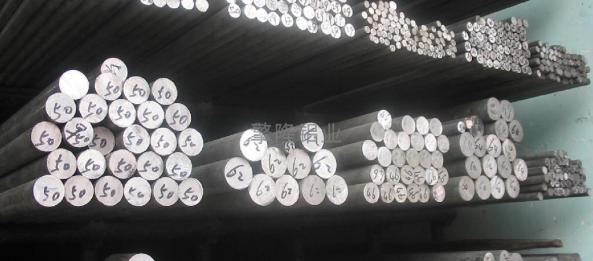
Goldman Sachs, since 2008, has been buying up MASSIVE amounts of one metal: aluminum, and storing them in warehouses everywhere, particularly in Detroit.  What are they doing with it?  Just sitting on it.

Why is this a bad thing?  Isn’t sitting on metal a good idea when it’s cheap?  Sure… always a good thing.  However, when you buy up so much of it, you’re affecting the world supply of it, not so much.  By reducing supply, you increase demand — and what happens when demand goes up and supply goes down?  Raise the cost.

In 2008, Goldman Sachs reported that they were storing 50,000 tons of Aluminum in warehouses and company owned property.  In 2010, that number increased to 850,000 tons.  At this time?  1.5 MILLION tons.   TONS.

Now, when companies want to buy aluminum domestically, as nations like China like to set prices at the state-level, companies will turn to domestic companies, like those owned by Goldman Sachs.  Because they control the aluminum, they can say “Sorry, we can’t get it to you that fast, we apologize,” when in actuality, they can delay delivery to drive up the price.  Indeed, subsidiary of Goldman, before purchasing, was able to supply aluminum to its end-users, was 6 weeks.  After the purchase and management rearrangement by Goldman, the wait is now sixteen MONTHS.

How much, you say?  What’s YOUR bottom line?

According to Cenk Uygur with The Young Turks, the price increase at this time, broken down per aluminum can of soda/pop, is one tenth of cent, per can — equivalent.  While that doesn’t sound like a lot of money to the end user, that makes a massive dent in the profits of the initial supplier, such as the Soda company, in this case, to buy and manufacture the soda cans.  At Goldman’s level, however,

With the average of US$90 million worth of aluminum cans (ALONE) used in the US, and tons and tons of aluminum used in house sidings, wheels in automobiles, automobile body, anything you can think of.  On average, that increase works out to be roughly US$2 per every 35 pounds of aluminum.  With the average automobile using 12 pounds of aluminum (The New York Times), that adds up to US$12 in additional cost — that didn’t come from anywhere other than artificially controlling the supply to demand — only by slowing down aluminum shipment… that it owns, and stores.

Bottom line, from the entire operation of aluminum storage and shipment control, Goldman Sachs’ cut of the operation: US$5 Billion over the last three years.  (Thanks again, to The New York Times for this figure.)

Madden’s quote at the beginning of this entry has a lot sharper a point on it now, doesn’t it?  What do you think?

Could “Giant” Coronal Hole signal new Solar Cycle?

Every 12-15 years, the Sun has a “temper tantrum” and throws out MASSIVE amounts of solar wind, solar material and lots of energy out into space, a lot of it hitting us.  This has been going on for millions (and likely billions) of years.  While this normally doesn’t do anything to us, it does create a heck of a light show with the aurora borealis, as it slams into earth’s northern magnetic fields.   However, this could spell disaster for us today.

What’s different about our lives now than 12-15 years ago?  Technology.  Flash forward from 15 years ago.  Now, everyone has a GPS in their car.  Everyone has a cell phone.  Everyone has a laptop.

So what?  Well, when solar wind slams into the Earth’s magnetic fields, called the Van Allen Belts, they create what’s called a magnetic storm.  The Earth’s magnetic system wobbles around, and indeed, could even be affected if the storm is strong enough (Such as a Magnetic pole reversal, in the most severe of cases…).  Even slight “wobbles” of our magnetic pole can cause massive problems for our technology fueled society.

All of a sudden, computer networks go down.  The computers that run the NYSE-Euronext stock market find themselves functioning improperly, losing all sorts of trades, or worse, messing made-trades up.  GPS satellites go offline, causing navigation and timing problems.

Why is this a big deal now?  Well, we’re on the verge of another solar cycle.  Sometime between now, and the beginning of 2014, the solar cycle is expected to peak.  This is usually marked with increasing amounts of solar wind and even coronal mass emissions from the sun, where massive amounts of solar material is ejected into space.  In the last few days, NASA has released a picture of the surface of the sun, where it (color-adjusted for temperature) seems to be a dead-zone.  This normally happens when mass ejections take place.   In this instance, a MASSIVE emission took place that has sent the material hurtling toward Earth at roughly 2 million miles per hour.  The diameter of the “hole” is roughly 400,000 miles across — or 50 earths wide.

Could this be the start of the solar cycle that tests how hardened and resilient (or not?) our electronics and networks are, that geeks and computer engineers have been dreading for years?

Halliburton Pleads Guilty to Destroying Evidence in Deepwater Horizon Explosion

Halliburton is expected to plead guilty to the destruction of evidence related to the explosion and sinking of the Deepwater Horizon oil rig in 2010.

The agreement, made with the United States Department of Justice includes paying the maximum fine of $200,000 — and has indeed, already made a $55 million contribution to the National Fish and Wildlife Foundation.

Indeed, the United States has agreed not to pursue further criminal prosecution in exchange for further cooperation in the ongoing  criminal investigation.

Government regulation has once again triumphed.  Halliburton has admitted that it destroyed results of simulations involved cement blocking the blown oil well — the results showing the cementing was unstable and would not work.  Hiding these results, it went ahead with the attempt anyway, which acted as a contractor to the United States Government.  Was this done strictly so it could make the attempt and collect the money — regardless of what happens; and damn the rest?

In an era where people are calling for less government regulation overall — this goes to show that government oversight of business, particularly in government contractors, is a good thing.  Halliburton lied to the people of the United States, then proceeded to go forth with a project that they knew probably wouldn’t work, knowing the results of the simulations — trampling and dishonoring the lives of those who were not only lost, but to the families of those who lost their loved ones, livelihood and those who worked tirelessly to restore habitats and our sea.