
 The more and more I give thought to it — the more and more I wonder if history will look back on our generation, and judge the indefinite imprisonment of those at Guantanamo Bay, Cuba as our version of Manzanar.
Japanese Issei, Nisei or Sansei were often the most targeted group for forced relocation during World War II — relocated almost strictly due to their lineage, family ties, or just because they even looked Japanese. Other groups were forced to relocate as well, but Japanese Issei and Nisei were the groups targeted the most.
Thankfully, none of the prisoners at Guantanamo are children or family members; but many similarities exist: they are not afforded a civil trial, as the prisoners have been designated as “unlawful military combatants,” in that while they are not a member of a recognized, uniformed military service, they either conduct, have been trained to conduct, or otherwise engage in or support militarized warfare. However, interestingly enough, the Center for Constitutional Rights and Human Rights Watch maintain that the United States has not held the Article 5 tribunals required by the Geneva Conventions. The International Committee of the Red Cross has stated that, “Every person in enemy hands must have some status under international law: he is either a prisoner of war and, as such, covered by the Third Convention, a civilian covered by the Fourth Convention, [or] a member of the medical personnel of the armed forces who is covered by the First Convention. There is no intermediate status; nobody in enemy hands can fall outside the law.”
I do give the United States Intelligence Community credit when I say that they are privy to information about these people that we, as civilians, do not know. It’s quite possible these people are as dangerous as the US Government says they are — why otherwise hold them? But… why is there a[n apparent] lack of jurisprudence for these people? Do those who fall between the cracks of the law just sit there, and wait for a trial that may never come? Will history look back on Guantanamo Bay Detention as a necessary evil, and something that kept the United States safe?
Or…
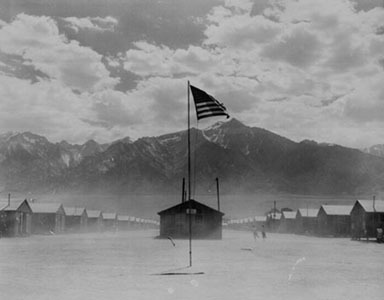
…will it be a stain of blood on our hands that even time can’t wash away?
Related articles
- Hunger strikes and renovations at Guantanamo Bay (collegian.com)
- US now naming force-fed Guantanamo prisoners (kansascity.com)
- One Arrest in San Francisco Solidarity Vigil for Guantanamo Bay Hunger Strikers (indybay.org)
- Guantánamo Bay and Spanish political prisoners: dissent and resistance by Ruth Littlewood (sheffieldslcblog.wordpress.com)
- Yemen begins push to get citizens out of Guantanamo (miamiherald.com)
- Yemenis march at U.S. Embassy, seek release of detainees (miamiherald.com)
- US now naming force-fed Guantanamo prisoners (hosted.ap.org)
- Guantanamo Bay has become money pit – former prison official (theinternetpost.net)
 SOPA
SOPA

 The Universe According To Samuel Cummings